BLOG 358: WHY YOU'RE SLEEPING 7–8 HOURS BUT STILL WAKING UP TIRED (AND WHAT YOUR FACE HAS TO DO WITH IT))
May 05, 2026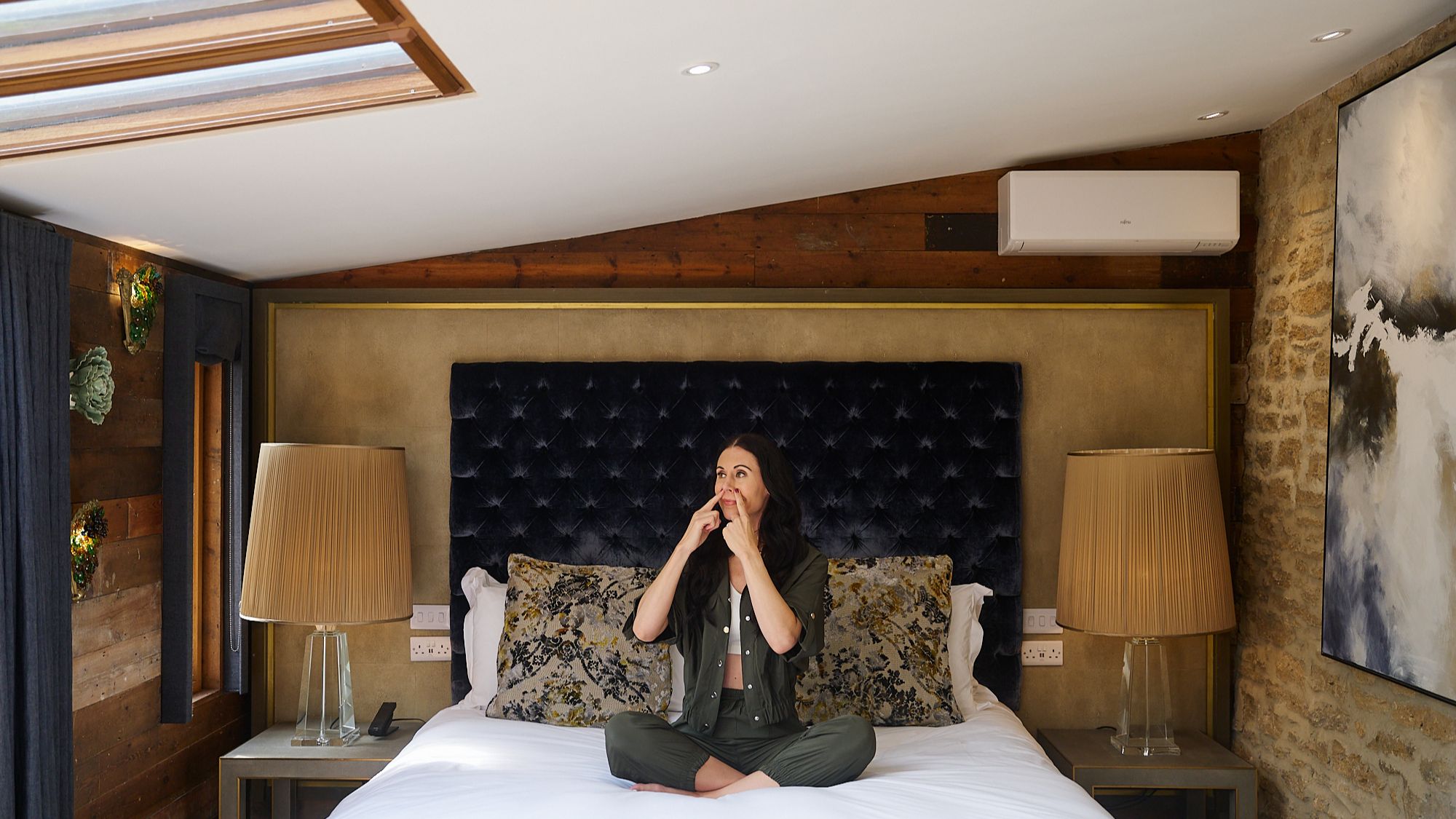
Have you ever gone to bed at a reasonable time, slept for what should be enough hours, and still woken up feeling tired? Perhaps your energy feels low, your skin looks a little dull or puffy, and your face doesn’t quite reflect how you want to feel when you start your day.
This is something I hear so often from my community, and it’s something I’ve explored deeply over my 20 years of teaching Face Yoga. What I’ve found is that the issue usually isn’t just about how long you sleep it’s about how deeply your body is able to rest and how well your system is supported before you even get into bed.
And one of the most overlooked pieces of that puzzle is your face.
The hidden reason your sleep isn’t fully restoring you
We often think of sleep as something passive, something that simply happens when we lie down and close our eyes. But in reality, your body has to actively shift into a state of repair and restoration. This is controlled by your nervous system, specifically the parasympathetic branch, often known as “rest and digest.”
In this state, your heart rate slows, your breathing deepens, your muscles soften, and your body begins essential processes like cellular repair and skin regeneration. Research has shown that deeper, higher-quality sleep is linked with improved skin barrier function, better hydration, and enhanced recovery overnight.
However, if your body is still holding onto stress, whether mental or physical, it may struggle to fully enter this restorative state. This can lead to lighter sleep, more waking during the night, and that all-too-familiar feeling of waking up tired even after a full night in bed.
What your face has to do with your sleep
Your face plays a much bigger role in this than most people realise.
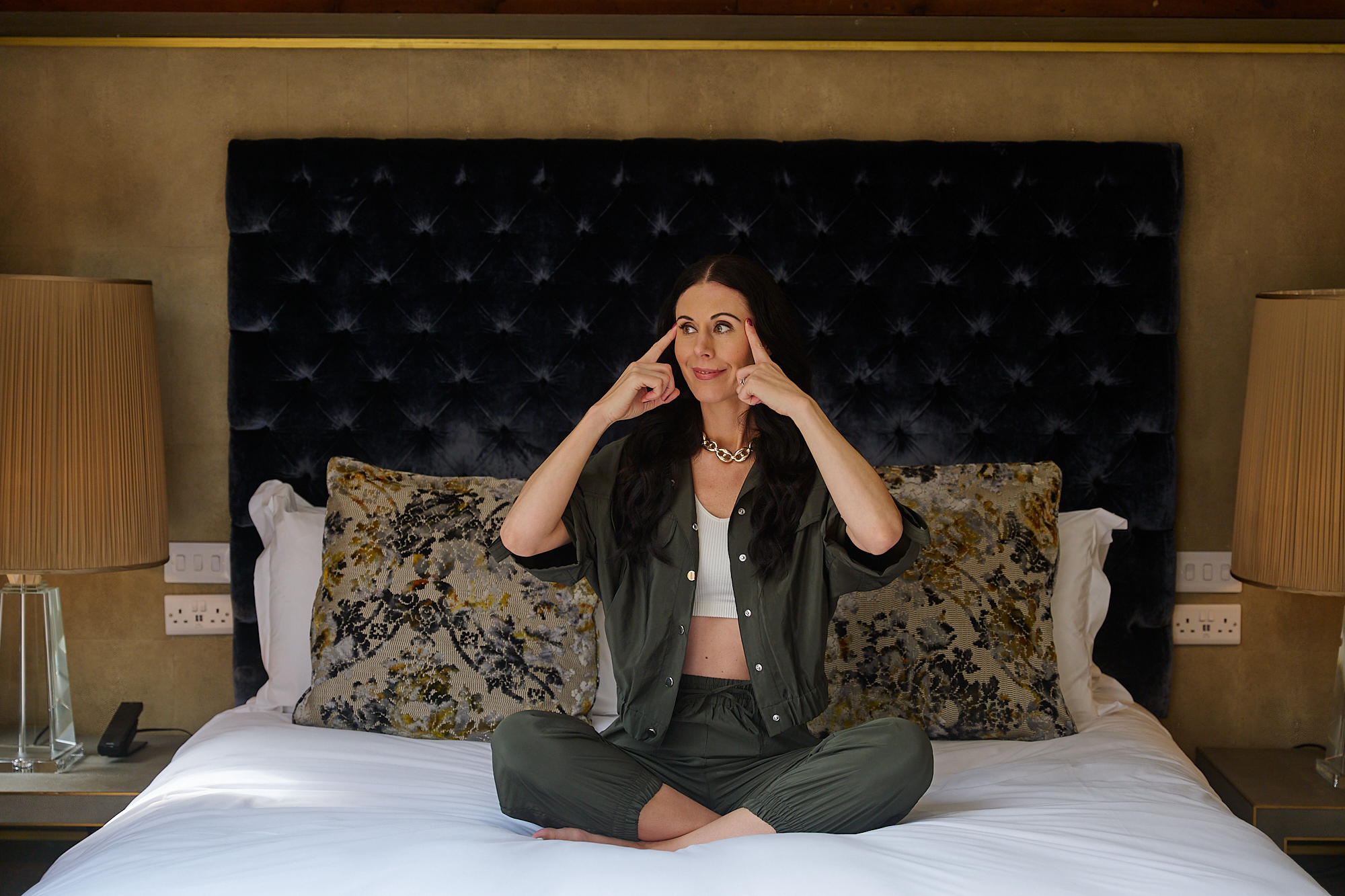
Throughout the day, we unconsciously hold tension in the face. This might show up as clenching the jaw, tightening around the eyes, raising the eyebrows, or holding subtle stress in the forehead. These patterns become so habitual that we often don’t notice them, but the body does.
There is a well-established concept in neuroscience called the facial feedback hypothesis, which suggests that the position and movement of facial muscles can influence emotional state. In simple terms, when your face is tense, your brain can interpret that as a signal of stress. When your face relaxes, it can signal safety and calm.
So if you go to bed with tension still held in your face, you may also be sending subtle signals to your body that it isn’t quite time to fully relax yet.
Why releasing facial tension before bed matters
When you consciously release tension in your face before sleep, something very powerful happens. You begin to shift your entire nervous system.
Studies on relaxation techniques such as massage and slow breathing show that they can reduce cortisol levels, increase parasympathetic activity, and improve overall sleep quality. Facial massage, in particular, has also been shown to support circulation and lymphatic drainage, which can reduce puffiness and improve skin tone.
So this isn’t just about relaxation in the moment. It’s about creating the right internal environment for your body to rest deeply, repair efficiently, and allow your skin to regenerate overnight.
Practical ways to improve your sleep (starting tonight)
The good news is that you don’t need to completely overhaul your routine. Small, consistent habits can make a big difference.
Start by giving yourself just 5–10 minutes before bed where you consciously shift out of “doing mode” and into “rest mode.” Try dimming the lights, stepping away from screens, and allowing your breathing to slow down. Even this simple act helps signal to your body that it’s safe to relax.
Breathing is one of the quickest ways to influence your nervous system. Try breathing in gently through your nose for a count of four, and out through your nose for a count of six. This slightly longer exhale helps activate the parasympathetic response and encourages your body to soften.
It can also be helpful to reduce stimulation in the hour before bed. Bright lights, scrolling, and constant input can keep the brain alert. Instead, think about creating a simple, calming ritual, something that feels grounding and repeatable each evening.
Simple Face Yoga techniques for the evening
This is where Face Yoga becomes such a powerful addition to your routine, because it works on both a physical and nervous system level.
Start with your jaw, as this is where many people hold the most tension. Place your fingertips gently along the jawline and use slow, circular movements to massage the area. You might notice tightness at first, just allow it to soften gradually.
Move up to the forehead and use your fingers to gently smooth across the skin, from the centre outwards. This helps relax the frontalis muscle, which is often overactive from expressions and screen use.
Around the eyes, lightly tap using your ring fingers. This not only helps reduce puffiness by encouraging lymphatic flow, but also brings a sense of calm to the whole face.
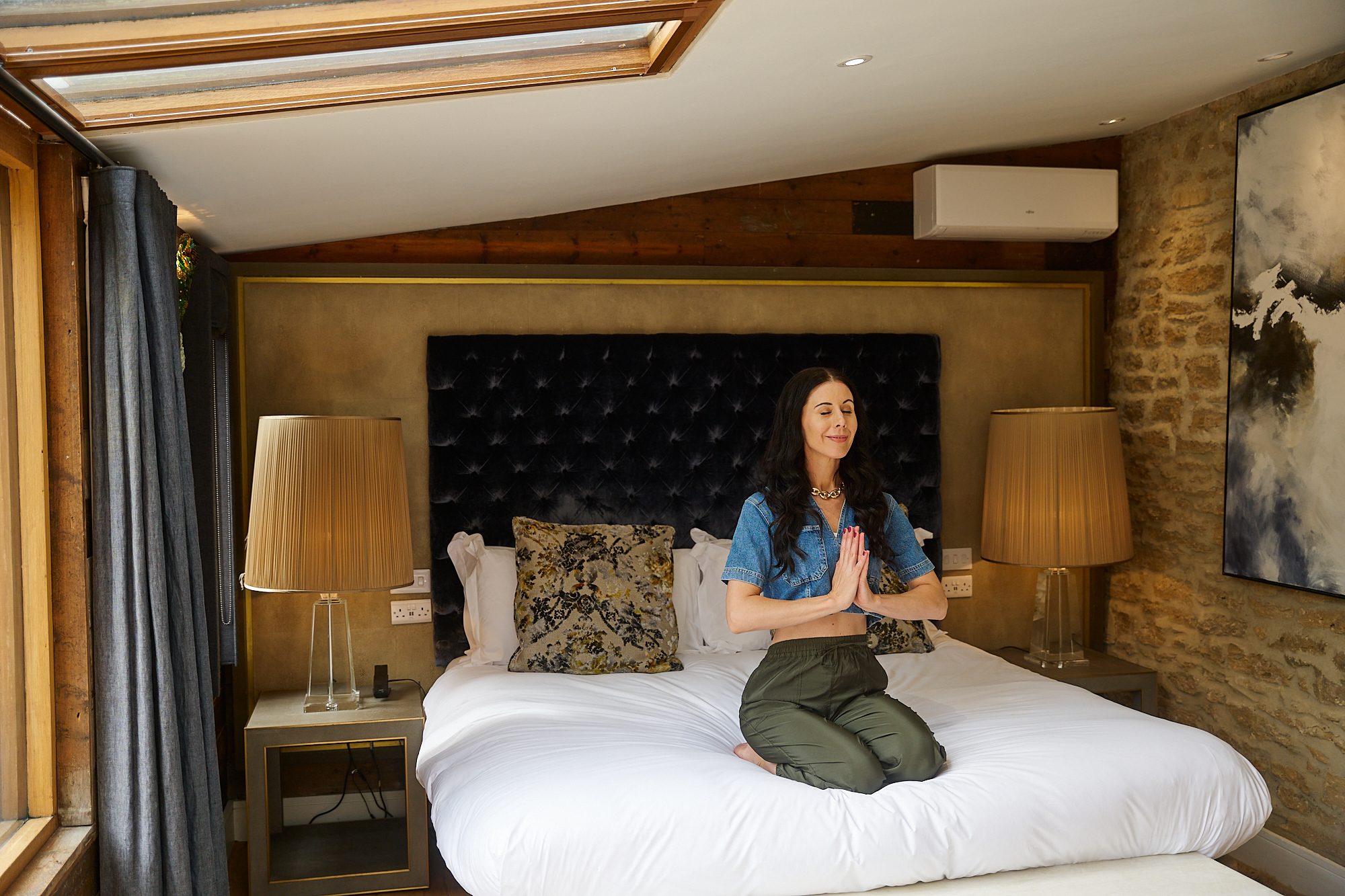
Finish by placing your hands lightly on your cheeks, closing your eyes, and taking a few slow, deep breaths. Allow your shoulders to drop, your tongue to relax away from the roof of your mouth, and your whole face to soften.
These techniques take just a few minutes, but they can have a profound effect on how your body transitions into sleep.
How this helps your skin overnight
When your body is in a more relaxed, parasympathetic state, your skin is able to do what it naturally wants to do, repair and renew.
Circulation improves, meaning more oxygen and nutrients are delivered to the skin. Lymphatic flow supports the removal of toxins and excess fluid, reducing puffiness. Muscle tension softens, which can help minimise the appearance of expression lines over time.
So when you wake up in the morning, you’re not just seeing the effects of your skincare, you’re seeing the effects of deeper rest.
Bringing it all together
If you’re currently waking up feeling tired, it may not be that you need more hours in bed. It may simply be that your body needs more support to relax fully before sleep.
By combining simple evening habits, mindful breathing, and just a few minutes of Face Yoga, you can begin to shift how your body rests overnight.
And over time, that can lead to not only better sleep, but brighter skin, a more relaxed face, and a greater sense of calm.
If you’d like guidance with this
If you’d like a simple, structured way to do this each evening, my Face Yoga for Dream Skin & Beauty Sleep Course which guides you step-by-step through:
- Evening Face Yoga routines
- Facial massage techniques
- Breathwork and relaxation practices
- Short, calming sessions designed for real life
So you can support your sleep and your skin naturally and consistently. You can get all thsi for just £21 here